Sustainable Packaging
A simple guide to multilayer plastic packaging, why its layers make recycling difficult, and how alternatives like paper-based flexible packaging can reduce complexity.

Sustainable Packaging
A simple guide to multilayer plastic packaging, why its layers make recycling difficult, and how alternatives like paper-based flexible packaging can reduce complexity.
It feels like one thin sheet. The outside carries the branding, the inside may look metallic, and the edges are sealed tightly enough to keep the food fresh.
But that “single” wrapper may actually be made from several materials bonded together.
This is multilayer plastic packaging, also known as multilayer packaging or MLP packaging. It protects products well, but it is much harder to recycle than it looks.
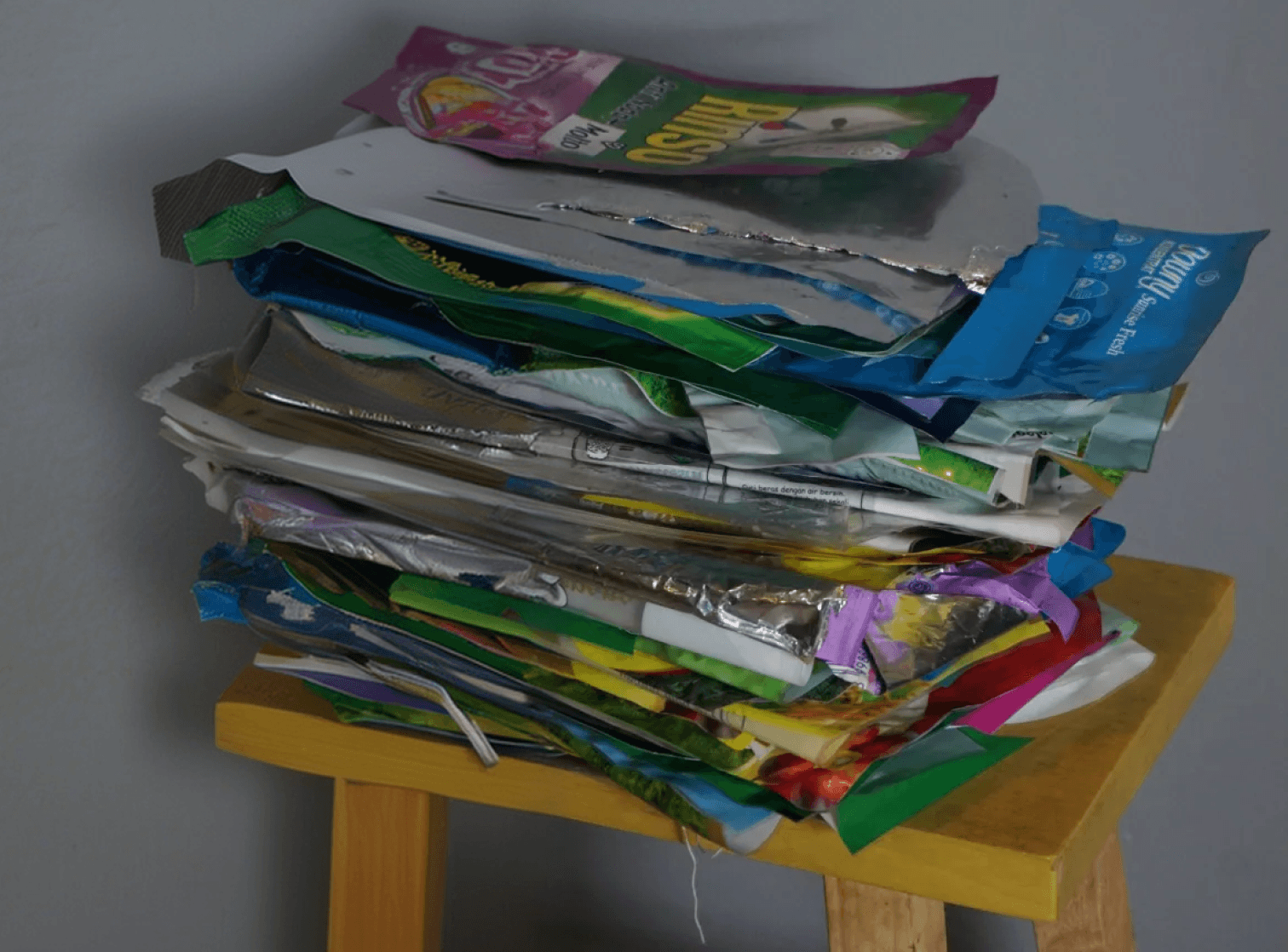
Multilayer plastic packaging combines two or more materials into one flexible structure. These layers may include plastics such as polyethylene, polypropylene, PET, polyamide or EVOH, along with aluminium, adhesives, inks or metallised coatings. The Fraunhofer Institute for Process Engineering and Packaging identifies PE, PP, PET, polyamide and EVOH among the materials commonly used in multilayer food packaging.
Manufacturers use several layers because one material may not be able to perform every job the pack requires. A coffee pouch must keep oxygen and moisture out while preserving aroma, a detergent refill must resist leakage, and a snack packet must remain sealed through transport and storage. Combining different materials allows the package to deliver these functions within one structure.
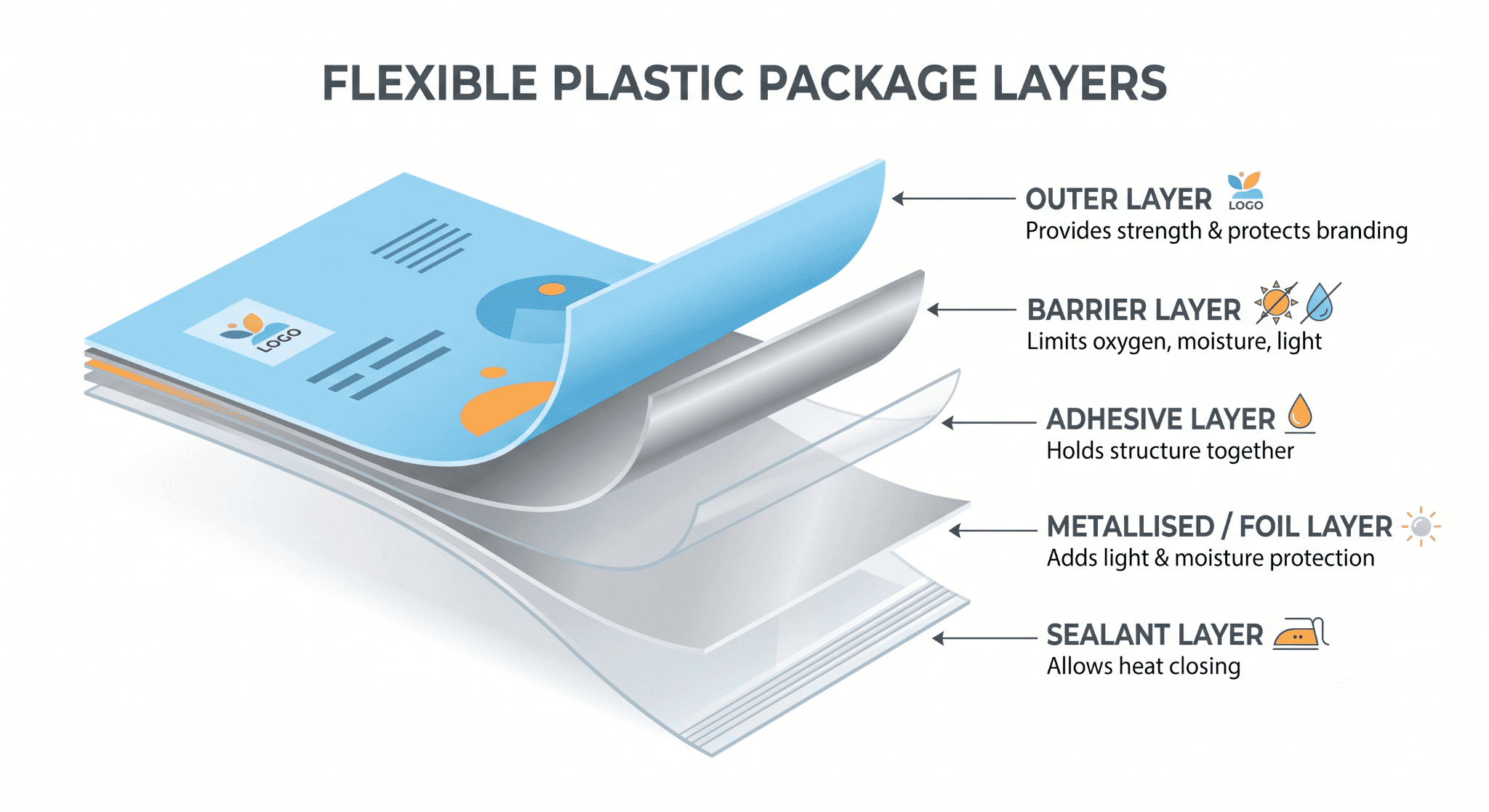
A typical flexible plastic package may include:
Outer layer: Provides strength, carries printing and protects branding
Barrier layer: Limits oxygen, moisture, light or aroma transfer
Sealant layer: Allows the pack to close under heat
Adhesive layer: Holds the structure together
Metallised or foil layer: Adds further protection from light and moisture
Not every package contains all these layers. Some have fewer; others use more complex combinations. A chips packet mainly needs to keep moisture out, while coffee packaging must also protect aroma and limit oxygen exposure.
That flexibility is why multilayer packaging became so popular. The structure can be adjusted according to shelf life, machinery, storage conditions and cost.
The India Plastics Pact found that flexible formats such as pouches and wrappers accounted for 91% of plastic-packaged FMCG units sold in its 2021 dataset. The report also notes that plastic pouches alone represented 87% of all units sold across the 29 FMCG product categories studied.
Once we start noticing it, multilayer packaging appears almost everywhere.
It is commonly used for:
Chips, biscuits and namkeen
Tea, coffee and spices
Chocolate and confectionery
Instant-food sachets
Frozen foods
Pet-food pouches
Shampoo sachets
Detergent refills
Pharmaceutical products
These packs are lightweight and help protect products from moisture, oxygen and contamination.
The difficulty begins when the pack is empty.
Recycling works best when the waste stream contains one main material.
A PET bottle, for example, can be collected with other PET bottles, washed, shredded and processed within a PET recycling stream.
Multilayer packaging is more complicated.
The pack only works because its layers remain tightly bonded during printing, filling, transport and use.
That same strength becomes a recycling problem.
When the wrapper is shredded, the materials do not separate. They simply become smaller pieces of the same mixed structure.
Heating does not solve the problem either. Different plastics melt at different temperatures and behave differently during processing. Adhesives, inks, foil and food residue add further complexity.
Specialised separation methods are being developed, but they require dedicated technology and are not part of most conventional mechanical recycling systems.
That is why plastic laminate packaging remains so difficult to process at scale.
Wrappers and sachets are small, light and easily mixed with other waste.
They may be contaminated with food, folded into other packaging or missed during sorting. Their low weight also means that large numbers must be collected before the material becomes commercially meaningful.
Then the recycling system must identify what the wrapper is made from and decide where it belongs.
That is difficult when one pack contains several materials.
Even when mixed flexible packaging is processed, the final material may not have consistent properties.
Different polymers may not work well together. Inks, aluminium, adhesives, and contamination can further lower the quality.
The recovered material may only be suitable for lower-value products, and only when there is a buyer for it.
This is easy to overlook.
A material is not successfully recycled simply because it enters a machine. The recovered output must also be useful and commercially wanted.
We often see the word “recyclable” printed on packaging. But that does not always tell us what happens in reality.
Technically recyclable means a process may exist to recycle the material under certain conditions.
Recycled in practice means the packaging is:
Collected locally
Correctly sorted
Accepted by a commercial facility
Processed at a meaningful scale
Converted into usable material
Supported by market demand
The RecyClass definition of recyclability follows a similar approach. It considers whether packaging is collected, sorted, recycled through commercial systems and turned into material used in new products.
So, when we hear that a pack is recyclable, it is worth asking:
Recyclable where?
A pack may have a recycling route in one region but no practical route in another. Local infrastructure matters as much as the material itself.
The answer depends on the waste-management system available.
Some multilayer packaging may reach specialised recyclers or be used in composite products. Other waste may go to co-processing, energy recovery or approved end-of-life routes.
Where collection systems are weak, some of it may be landfilled, openly burned or lost into the environment.
India’s Plastic Waste Management Amendment Rules, 2024 place extended producer responsibility obligations on producers, importers and brand owners and include reporting requirements for recycling and end-of-life treatment.
Regulation creates responsibility, but it cannot make a complex packaging structure easy to recycle.
Material design still matters.
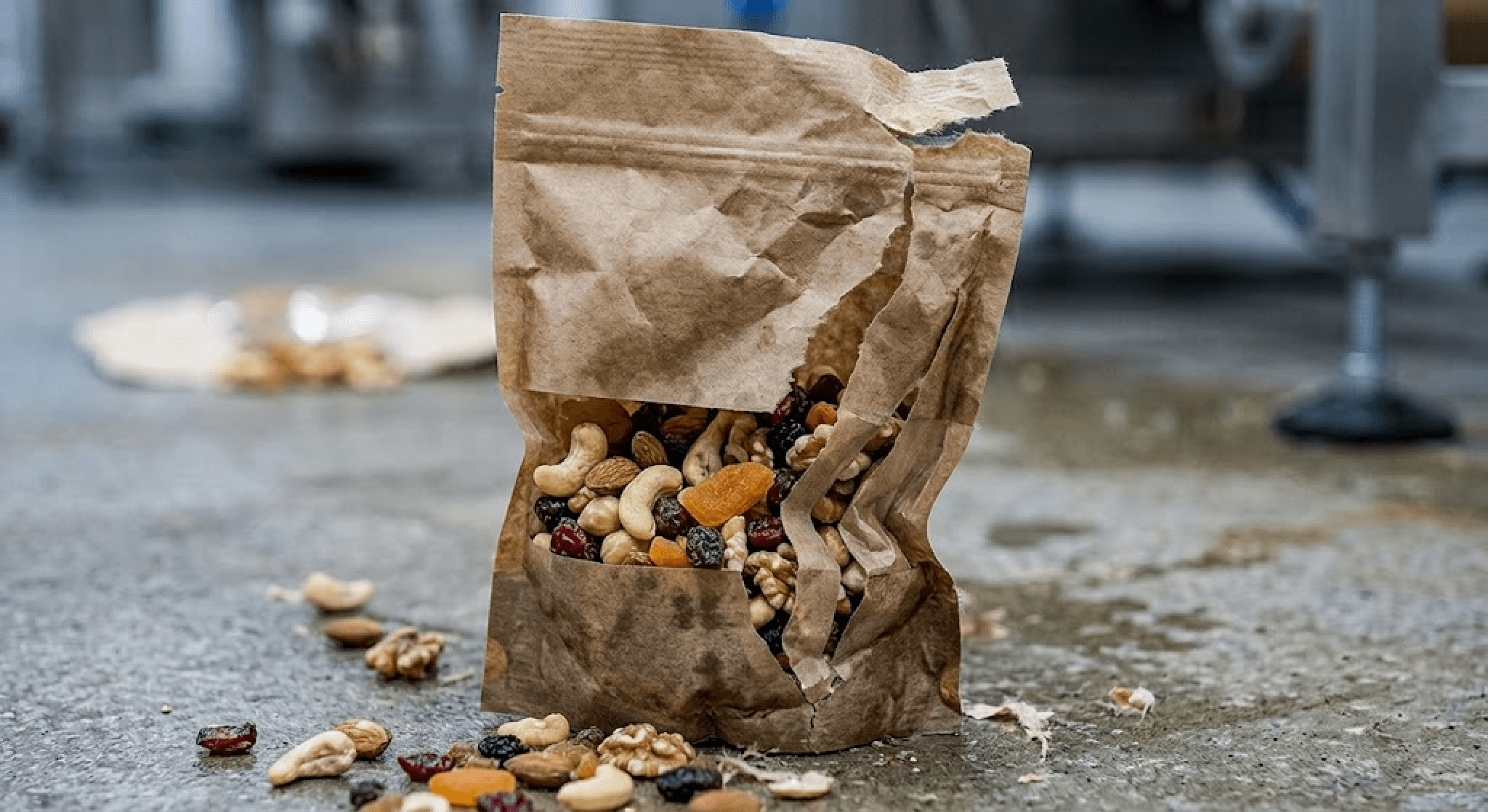
Paper seems like the obvious alternative, but ordinary paper cannot always provide the protection required for food, personal-care and household products.
On its own, paper may struggle to:
Resist water, oil and grease
Prevent oxygen and moisture transfer
Protect aroma
Form a reliable heat seal
Withstand transport
Run on packaging machinery
A disposable paper cup is a familiar example. It usually contains a thin plastic lining to stop liquid from soaking through. Because this lining is tightly bonded to the paper fibres, many conventional paper-recycling systems cannot process the cup easily.
In some cases, a simple single-material plastic cup may be easier to sort and recycle where the right system exists. The UK Parliament’s report on Disposable Packaging: Coffee Cups also highlights how the plastic lining makes paper cups difficult to recycle.
The same issue applies to other paper-based packs. Coatings and laminates improve performance, but they can also create another mixed-material structure.
So, a paper-like appearance does not automatically make packaging sustainable. We still need to examine the coating, adhesive, ink and intended end-of-life route.
There is no single material that works for every product.
A better starting point is to ask what the product genuinely needs and remove unnecessary complexity.
That may mean:
Using fewer materials
Choosing compatible materials
Avoiding unnecessary layers
Protecting the product without overdesigning the pack
Considering local collection systems
Testing on real machinery
Making disposal claims clear
In some applications, mono-material plastic may offer a better recycling route. In others, barrier-coated paper or compostable structures may be more suitable.
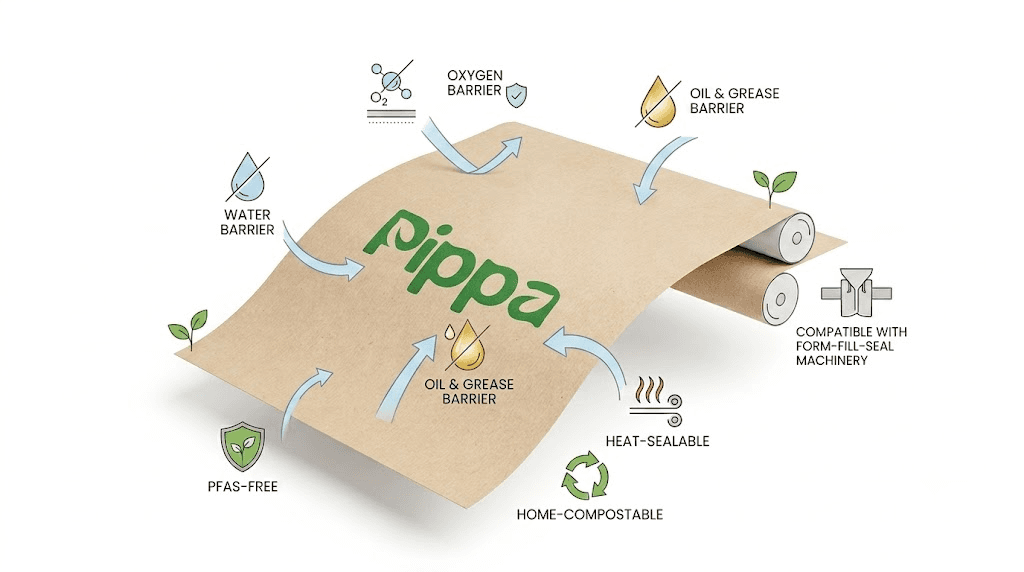
Pippa is exploring this through a paper-based flexible packaging structure supported by a bio-based coating made from agricultural waste. The coating is designed to provide water, oxygen, oil and grease barriers, along with heat-sealing properties. Pippa also states that the material is PFAS-free, home-compostable and compatible with form-fill-seal machinery.
The aim is to deliver several packaging functions through one coated paper structure instead of relying on multiple conventional plastic layers. However, no single material can replace every coffee pouch, snack wrapper or medical laminate. Each application still needs to be tested for shelf life, product chemistry, storage, sealing, transport and machinery.
But it gives us a useful way to rethink the problem.
Instead of asking how many layers we can add to make packaging work, perhaps we should start by asking how few are truly necessary.
Multilayer plastic packaging combines two or more materials into one structure to improve strength, sealing and product protection.
MLP packaging is commonly used for chips, coffee, spices, detergents, pet food, frozen foods and personal-care sachets.
Its different plastic, foil, ink and adhesive layers are tightly bonded and difficult to separate in conventional recycling systems.
It may be technically recyclable, but actual recycling depends on local collection, sorting, processing facilities and market demand.
It may be recycled through specialised systems, used in co-processing, sent for energy recovery, landfilled or lost into the environment.
No. Some paper packs contain plastic coatings or laminates that can also make recycling difficult.
Alternatives may include mono-material films, barrier-coated paper and certified compostable packaging, depending on the product.
In some applications, yes. However, the material must still meet shelf-life, barrier, sealing, storage and machinery requirements.
© 2026 Pippa • Privacy Policy • Terms & Conditions
Made with 💚 by Mission Sustainability