Sustainable Packaging
Learn what PFAS are, why they were used for grease-resistant food packaging, why concerns have grown, and how PFAS-free alternatives work.

Sustainable Packaging
Learn what PFAS are, why they were used for grease-resistant food packaging, why concerns have grown, and how PFAS-free alternatives work.
Take a greasy burger, fries or a bakery product wrapped in paper. The packaging has a difficult job: it needs to stop oil from soaking through while staying light, printable and easy to handle.
For years, one way of achieving that grease resistance was through a group of chemicals called PFAS.
Most of us have now heard the term “forever chemicals”, usually in conversations about water pollution or human health. But PFAS have also had a long connection with food packaging because of one very useful property: they can make surfaces highly resistant to oil, grease and water.
That performance is exactly what made them attractive. It is also why replacing them is not as simple as removing one ingredient from a coating.
PFAS stands for per- and polyfluoroalkyl substances. It does not refer to one chemical, but to a very large and diverse family of synthetic substances.
What they share is the presence of carbon-fluorine bonds. These are among the strongest bonds in organic chemistry, which gives many PFAS exceptional resistance to heat, chemicals and degradation.
The European Chemicals Agency’s overview of PFAS explains that PFAS are used across many industries because of properties such as heat stability and water- and grease-repellency. That same chemical stability also means many PFAS can remain in the environment for very long periods.
This is an important distinction: PFAS were not adopted because manufacturers wanted a “forever chemical”. They were adopted because durability and resistance were useful properties.
The persistence problem came with them.
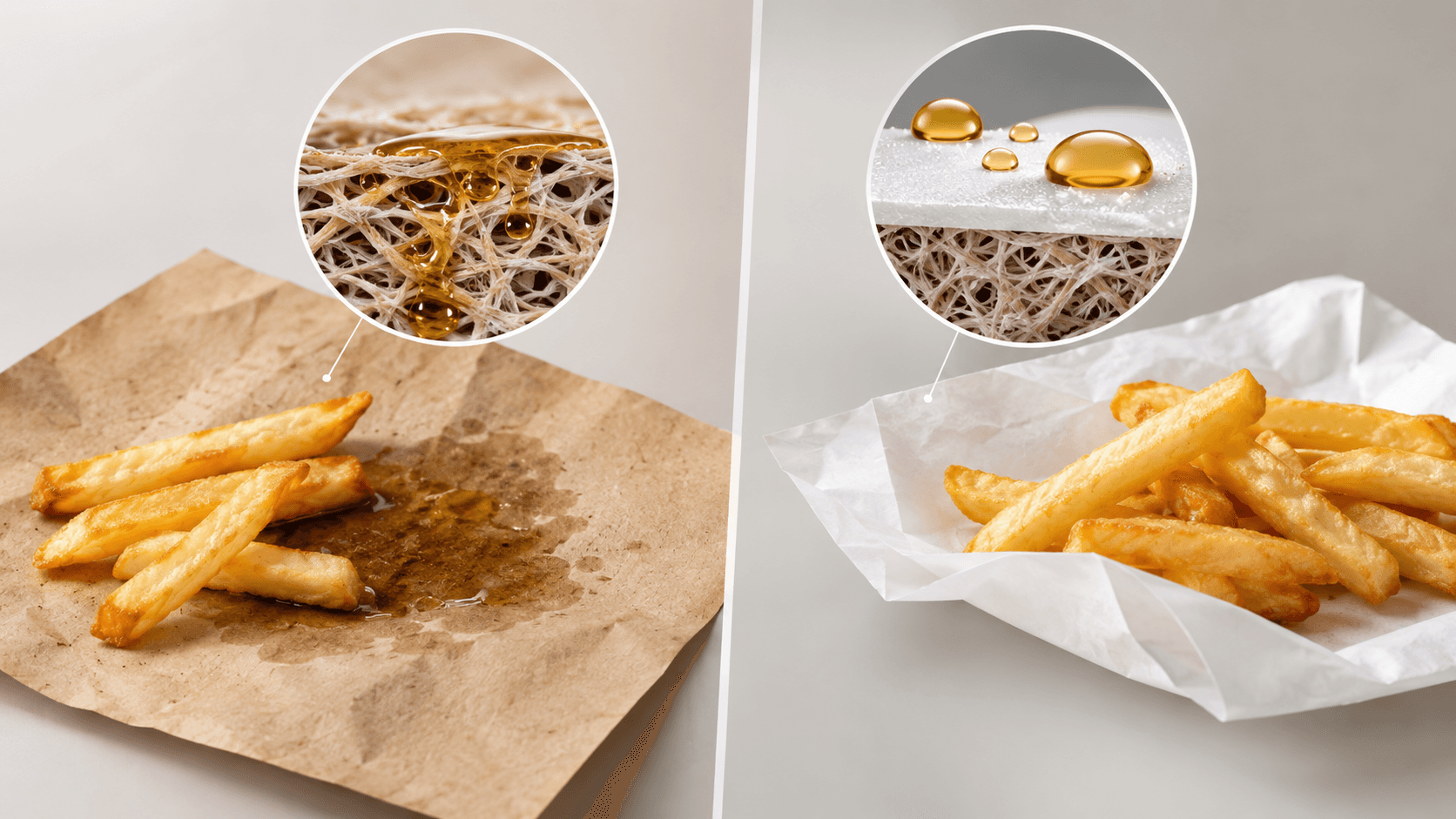
Ordinary paper does not naturally like oil.
Its network of cellulose fibres contains spaces that grease can penetrate. Anyone who has put a samosa or fries on plain paper has seen the familiar translucent oil patch appear.
PFAS-based treatments helped change the surface behaviour of paper. Instead of oil spreading easily into the fibres, the treated surface became much more resistant to both grease and water.
That made PFAS particularly useful in products such as fast-food wrappers, microwave popcorn bags, takeaway containers and pet-food bags.
The U.S. FDA’s guidance on PFAS in food-contact applications explains that PFAS-containing grease-proofing agents were applied to paper and paperboard specifically to prevent grease, oil and water from leaking through the packaging.
For a packaging manufacturer, that was an attractive combination: a very thin treatment could give lightweight paper a function it did not naturally have.
Oil and water behave differently, but many conventional packaging materials struggle with at least one of them.
PFAS became unusual because certain members of the family could help repel both.
Their low surface energy makes it difficult for liquids to spread across and penetrate a treated surface. That is why PFAS have also appeared in stain-resistant textiles, non-stick applications and other products where repellency is valuable.
The OECD report on PFAS and alternatives in paper food packaging notes that the strength of the carbon-fluorine bond and the resulting physical and chemical properties are central to why PFAS have been used so widely.
From a packaging-performance point of view, the chemistry worked very well.
The harder question is what happens after the package has done its job.
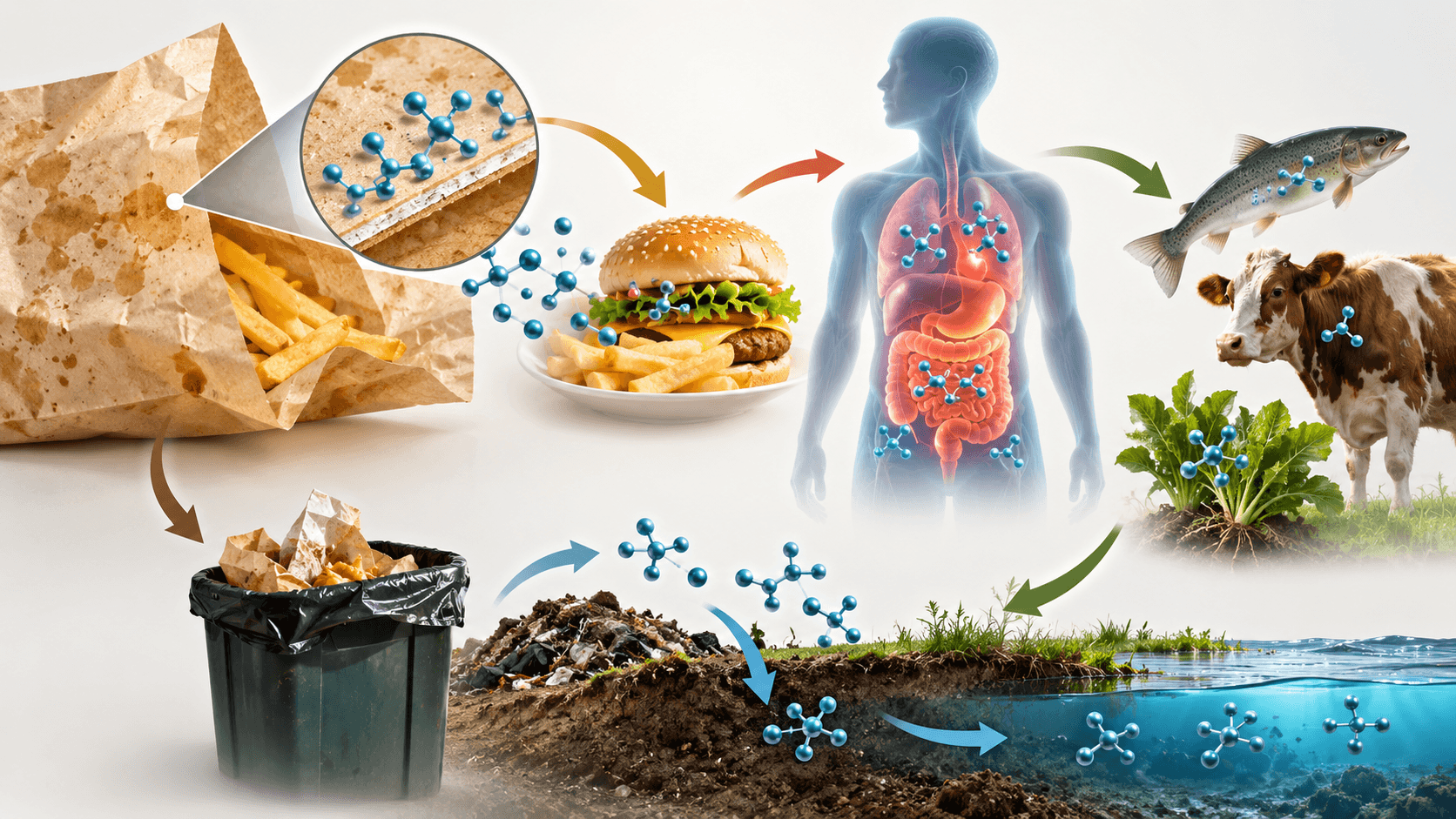
A chemical that resists breaking down during use may also resist breaking down after disposal.
This is where the conversation around PFAS has changed considerably.
Many PFAS are highly persistent in the environment. Some can move through soil and water, while certain PFAS can also accumulate in people, animals or plants. Importantly, PFAS are a broad family, so their toxicological properties are not identical. However, regulators have linked exposure to some PFAS with adverse health effects.
Food packaging creates an additional concern because some PFAS used in grease-proofing treatments can potentially migrate from the packaging into food.
The FDA specifically identified paper and paperboard grease-proofing agents as a food-contact use with potential dietary exposure concerns.
This is why the issue is not simply whether a wrapper performs well. We also have to consider what the coating contains, whether substances can migrate and what happens to those chemicals after disposal.
The regulatory landscape has already changed in some markets.
In February 2024, the U.S. FDA announced that PFAS-containing grease-proofing substances were no longer being sold by manufacturers for food-contact use in paper and paperboard packaging in the United States.
The process went further in January 2025, when the FDA determined that 35 food-contact notifications related to PFAS-containing grease-proofers were no longer effective because those uses had been abandoned.
This is specific to the U.S. market, and PFAS regulation differs across countries. But it shows the direction in which packaging chemistry is moving: brands and material developers increasingly need ways to achieve grease resistance without relying on the fluorinated chemistries historically used for that purpose.
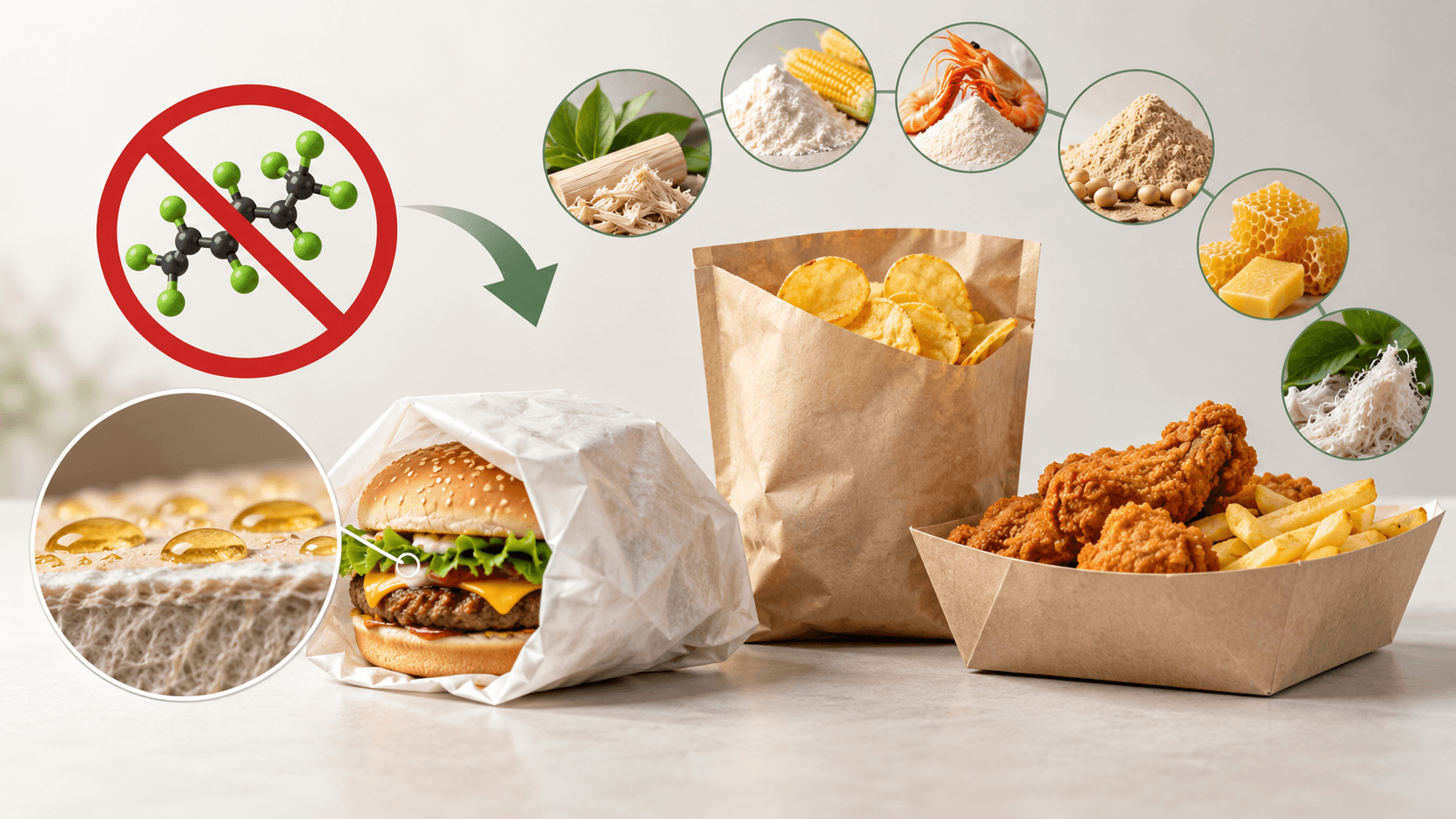
Removing PFAS does not remove the packaging requirement.
A burger wrapper still cannot allow grease to soak onto the customer's hands. A snack pouch still needs to resist oil. A food tray still has to hold its contents without becoming weak or stained.
This is the real material challenge.
We need coatings that can create a dense enough surface to slow oil penetration while still working with paper, printing, sealing and manufacturing processes.
Research is now looking at materials such as cellulose, starches, chitosan, proteins, waxes and other bio-based systems as possible alternatives. A review of PFAS and alternatives in paper food packaging found several promising classes of fluorine-free coatings, while also showing that achieving strong grease resistance, moisture protection, biodegradability and commercial viability at the same time remains technically challenging.
More recent work continues to improve these systems. A 2025 study, for example, developed a fully bio-based coating using chitosan, genipin and microfibrillated cellulose that achieved high grease resistance on paper in laboratory testing.
The point is not that one of these materials has already solved every application. It is that grease resistance no longer has to automatically mean fluorinated chemistry.
Replacing PFAS is only one part of developing better food packaging.
A coating may be PFAS-free and provide excellent grease resistance, but brands may also need moisture protection, oxygen barriers, heat sealing, food-contact safety and machine compatibility.
That means we cannot evaluate a coating through one claim alone.
For a coffee pouch, oxygen and moisture may matter more than grease. For an oily snack, grease resistance becomes much more important. For a heat-sealed flexible pack, the coating also needs to behave properly on the production line.
This is why the next generation of barrier coatings increasingly aims to combine several functions instead of solving only one.
A 2026 review on biopolymer coatings for sustainable food packaging describes the growing work around bio-based coatings that combine water, gas, grease and mechanical resistance while remaining compatible with paper substrates.
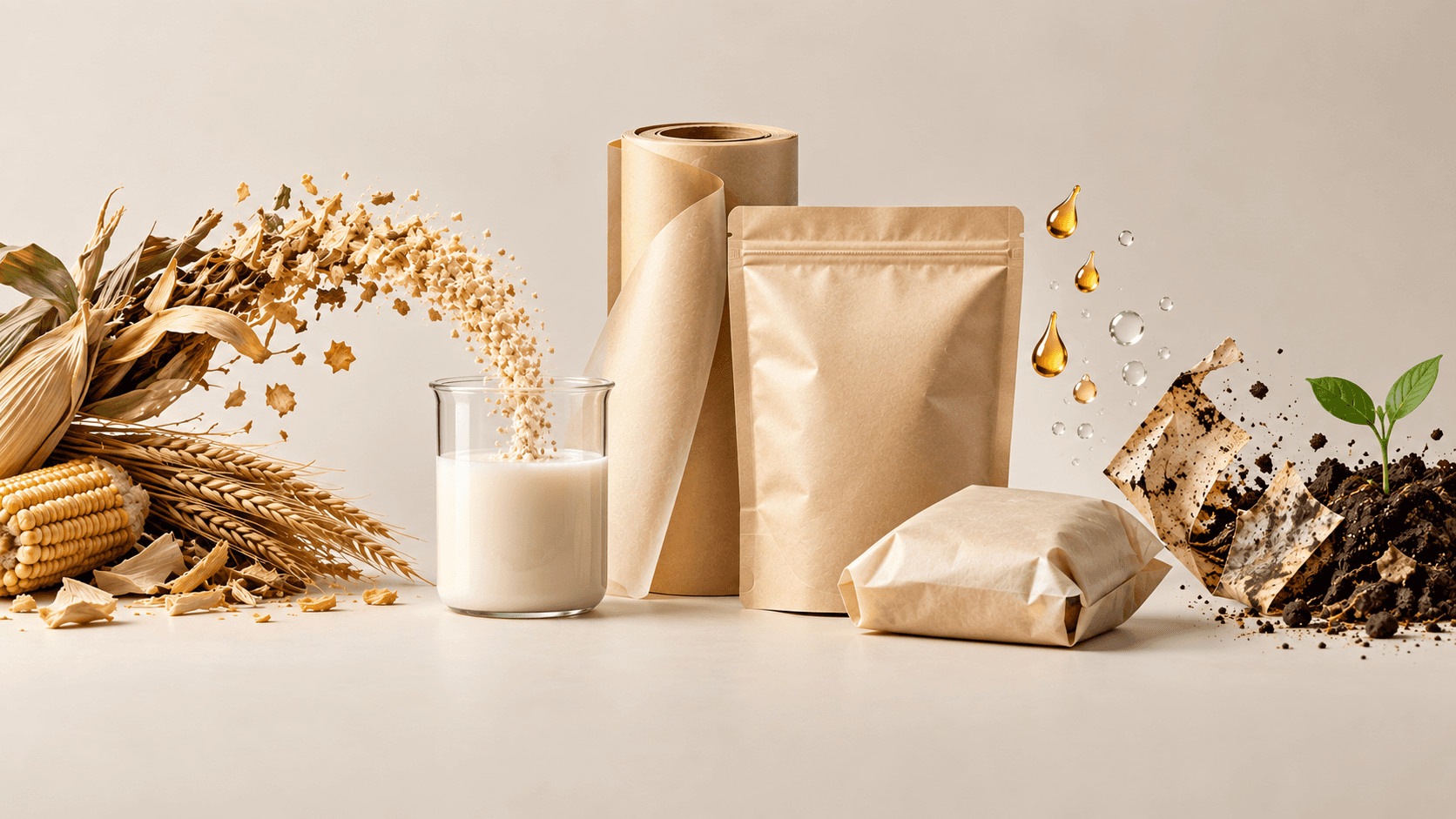
At Pippa, PFAS-free performance is built into the material approach rather than treated as an add-on.
Our bio-based coating is made using agricultural waste streams and applied to paper or biofilm substrates. It is designed to provide oil and grease resistance alongside water and oxygen barriers and heat-sealable properties.
Pippa is also positioned as free from PFAS and microplastics, home compostable and compatible with form-fill-seal machinery.
For us, the important part is not simply replacing one chemical with another. It is designing a coating that can provide the functions food packaging needs while avoiding PFAS altogether.
Because grease resistance is still necessary.
The question is whether we can achieve it with a material system designed for what comes after the packaging has done its job, as carefully as we design for what happens before.
PFAS were used mainly to give paper and paperboard strong resistance to grease, oil and water.
No. PFAS are a large family of chemicals with different properties, uses and toxicological profiles.
Some PFAS previously used as grease-proofing agents in paper packaging have the potential to migrate into food.
PFAS grease-proofing agents are no longer authorized or being sold for this use in the U.S., following the FDA's phase-out and 2025 regulatory action.
Yes. Pippa positions its bio-coated packaging material as free from PFAS.
Pippa uses a bio-based coating made from agricultural waste that is designed to provide oil and grease barrier performance.
Yes. The coating is also designed to provide water and oxygen barriers along with heat-sealable properties.
Pippa is designed for form-fill-seal compatibility, subject to the requirements and trials of each application.
© 2026 Pippa • Privacy Policy • Terms & Conditions
Made with 💚 by Mission Sustainability