Learn how food brands can transition from plastic to paper-based packaging while considering barriers, shelf life, machinery and end-of-life.

Learn how food brands can transition from plastic to paper-based packaging while considering barriers, shelf life, machinery and end-of-life.
For a food brand, replacing plastic with paper can sound like a straightforward decision.
Take a packet of chips. The current plastic pouch keeps moisture out, seals quickly, survives transport and runs smoothly on the packing line. If the brand wants to reduce plastic, the obvious thought is: can we simply make the same pouch from paper?
Usually, the answer is more complicated.
Moving to paper-based packaging is not just a material swap. We are replacing a packaging system, and the new structure still has to protect the food, maintain shelf life, seal properly and work on commercial machinery.
Before choosing a new material, we need to understand what the current packaging is actually doing.
Coffee, for example, needs good protection from oxygen, moisture and aroma loss. Chips need to stay crisp. Spices need to retain their aroma, while an oily snack needs a pack that can resist grease. Frozen foods bring another set of temperature and moisture challenges.
So the starting point is the food itself. How sensitive is it to oxygen? What happens if moisture enters the pack? How long does it need to stay fresh? What temperatures and humidity levels will it face during storage and transport?
These are not minor details. Research into food-packaging barriers shows that oxygen and water-vapour transmission can directly influence product quality and shelf life.
The first transition, then, happens on paper before it happens to paper: define exactly what the existing packaging needs to achieve.
We often think of paper as an easy replacement because it is familiar, printable and fibre-based. But untreated paper is porous and naturally sensitive to moisture.
For many food products, it needs additional protection against water, oxygen, oil and grease. It may also need to preserve aroma and create a reliable heat seal.
That is where coatings become important.
Research on sustainable barrier coatings for paper food packaging identifies oxygen, moisture and grease resistance as some of the main properties functional coatings can add to paper.
This is also why a packet that looks like paper may still contain conventional plastic. A thin plastic laminate can give paper the performance it is missing, but it can also create another mixed-material structure.
So the challenge is not simply replacing the plastic material. We need to replace the functions that plastic was performing.
Image
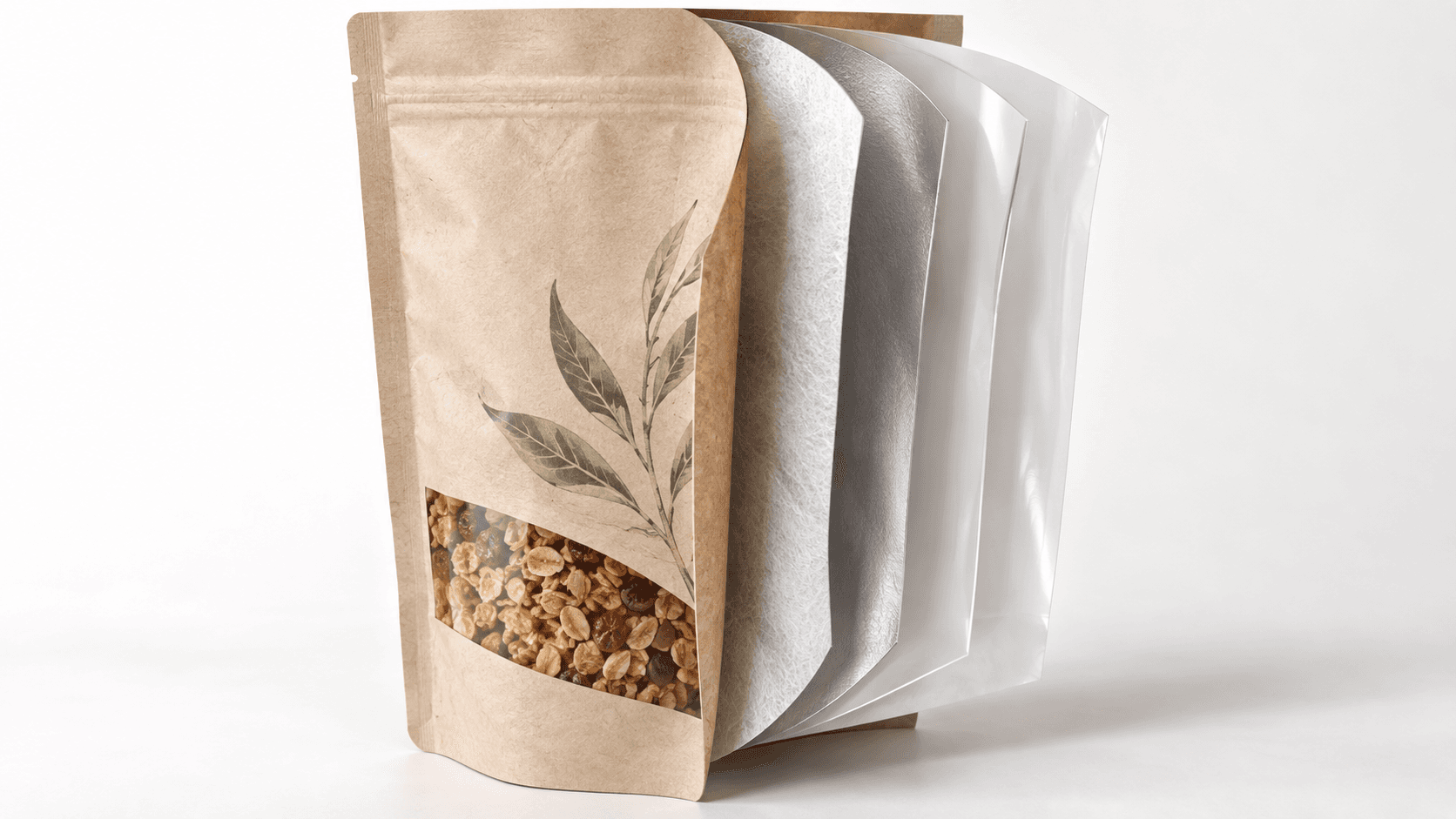
A flexible food pouch may contain different layers for printing, strength, oxygen protection, moisture protection, and sealing.
Before changing the structure, it helps to map these functions. Which ones are essential? Which could be combined? Are there layers that can be removed without affecting the product?
This changes the packaging brief considerably.
Instead of saying, “We need a paper pouch,” we can say, “We need a paper-based pouch that provides this level of moisture protection, retains aroma and seals reliably on our existing machine.”
That is a much better place to start.
A paper pouch can look great on a shelf and still fail if the barrier is wrong.
For food brands, some of the most important packaging properties are invisible. Oxygen protection can help preserve sensitive products. Moisture protection keeps foods such as chips and biscuits from losing their texture. Oil and grease resistance matters for fatty foods, while aroma protection becomes particularly important for coffee, tea and spices.
The required barrier also changes dramatically from one product to another. A pack developed for dry grains should not automatically be expected to work for roasted coffee or an oily snack.
Research into bio-based barrier coatings for paper packaging similarly looks at how coatings can improve paper's oxygen and moisture-barrier properties.
For brands making the switch, the useful question is not “Does this look like paper?” It is “Does this paper structure protect our food?”
Image
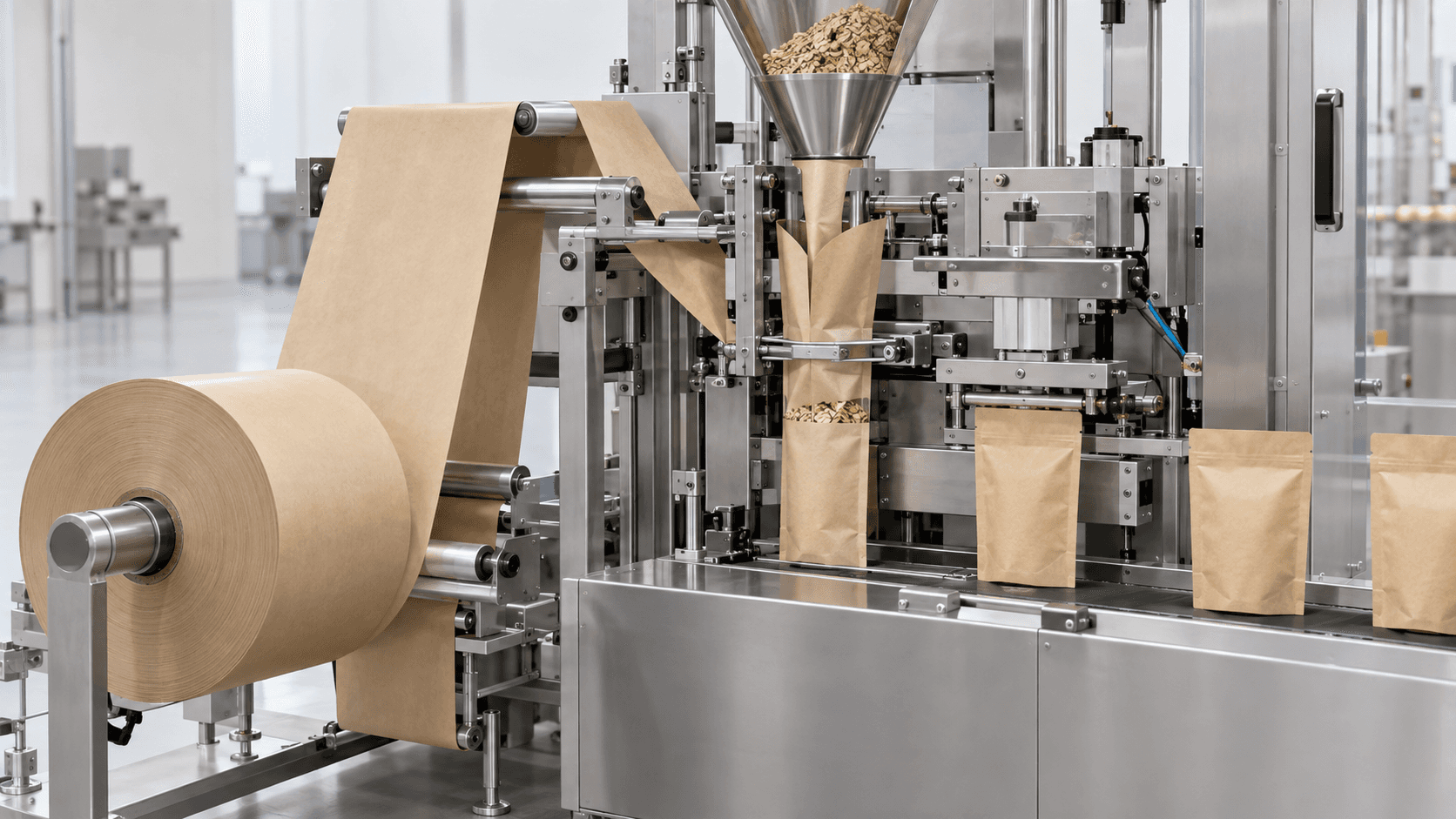
We can find a material that performs beautifully in a sample and still struggle with it on the production line.
Most large food brands depend on automated packaging equipment. The material has to unwind, fold, form, fill, and seal consistently at commercial speeds.
That means we also need to understand how the paper-based structure behaves at different sealing temperatures, whether it forms correctly, whether the seals remain strong, and whether the machine can maintain its normal speed.
A solution that requires entirely new equipment may still be technically feasible, but the cost and downtime can make adoption much more difficult.
This is why machinery trials should happen early in the transition rather than after the material has already been selected.
Once the structure works on the machine, the real test begins: putting the actual food inside it.
A pouch that performs well with dry tea may behave very differently with oily snacks. A package stored in a controlled warehouse may perform differently when it spends days travelling through hot and humid conditions.
Shelf-life testing should therefore look at the complete system: the food, packaging, seal, storage conditions and transportation.
This is important because reducing packaging impact should not come at the cost of increasing product waste. Packaging still needs to do its first job well: protect what is inside.
Image
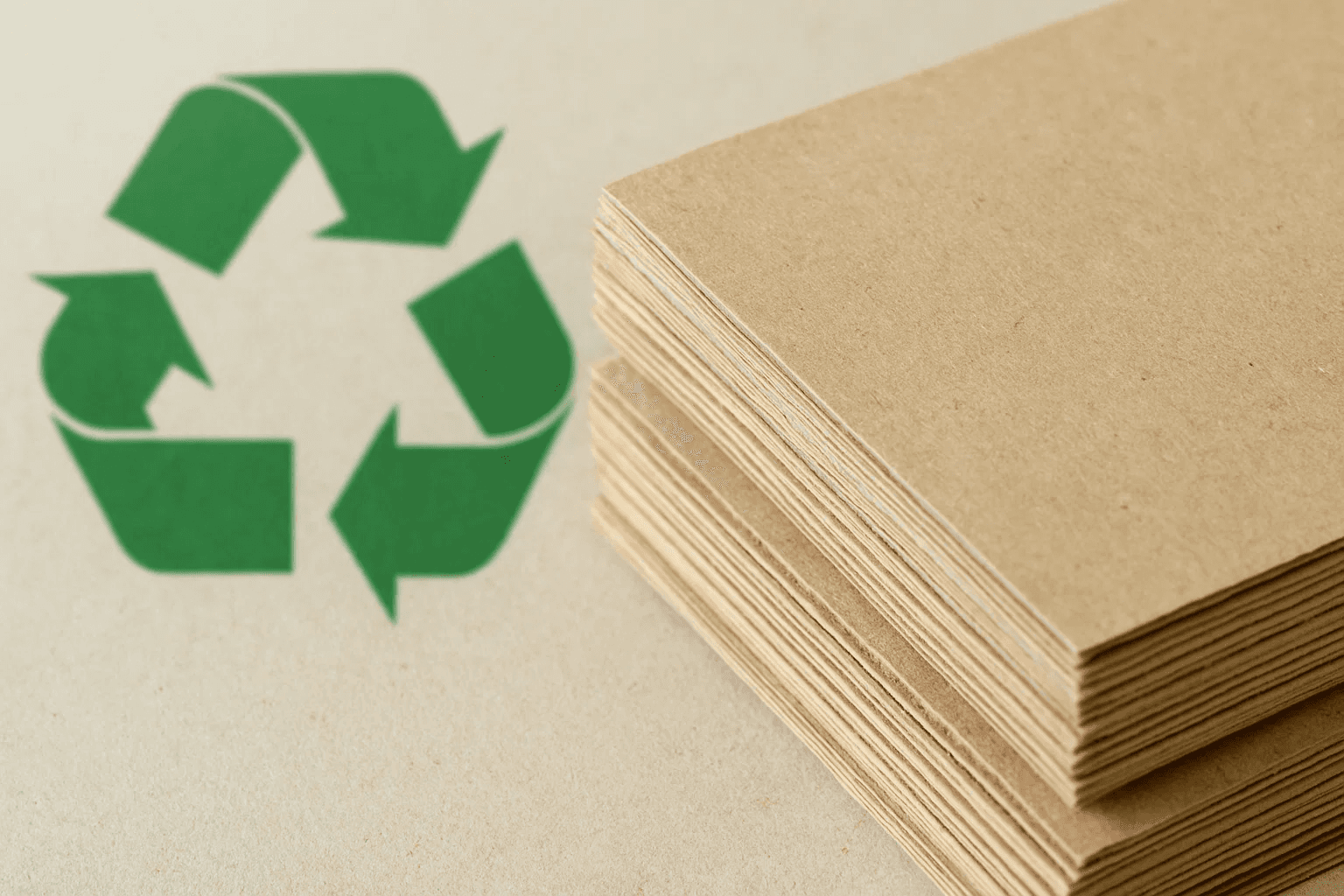
There is another assumption we need to avoid: if a package is made from paper, it must be easy to recycle.
Not necessarily.
Paper packaging may contain coatings, laminates, inks and adhesives that affect how it behaves in a paper mill. The Cepi Paper-Based Packaging Recyclability Guidelines explain that functional coatings and laminates can make the recycling process more challenging and should be considered during packaging design.
The same principle applies to compostability. A paper-looking pack is not automatically compostable just because its main substrate is paper.
We need to consider the whole structure, including the coating and its intended end-of-life route.
For a food brand, the transition can be broken into eight steps:
Understand what the existing pack is doing.
Define the barriers the food actually needs.
Identify a suitable paper-based structure.
Check sealing and machinery compatibility.
Run trials with the real product.
Test shelf life, storage and transportation.
Confirm how the complete pack should be disposed of.
Scale only once performance has been proven.
It may take more work than simply changing the material specification, but it also prevents us from solving one packaging problem while creating another.
Image
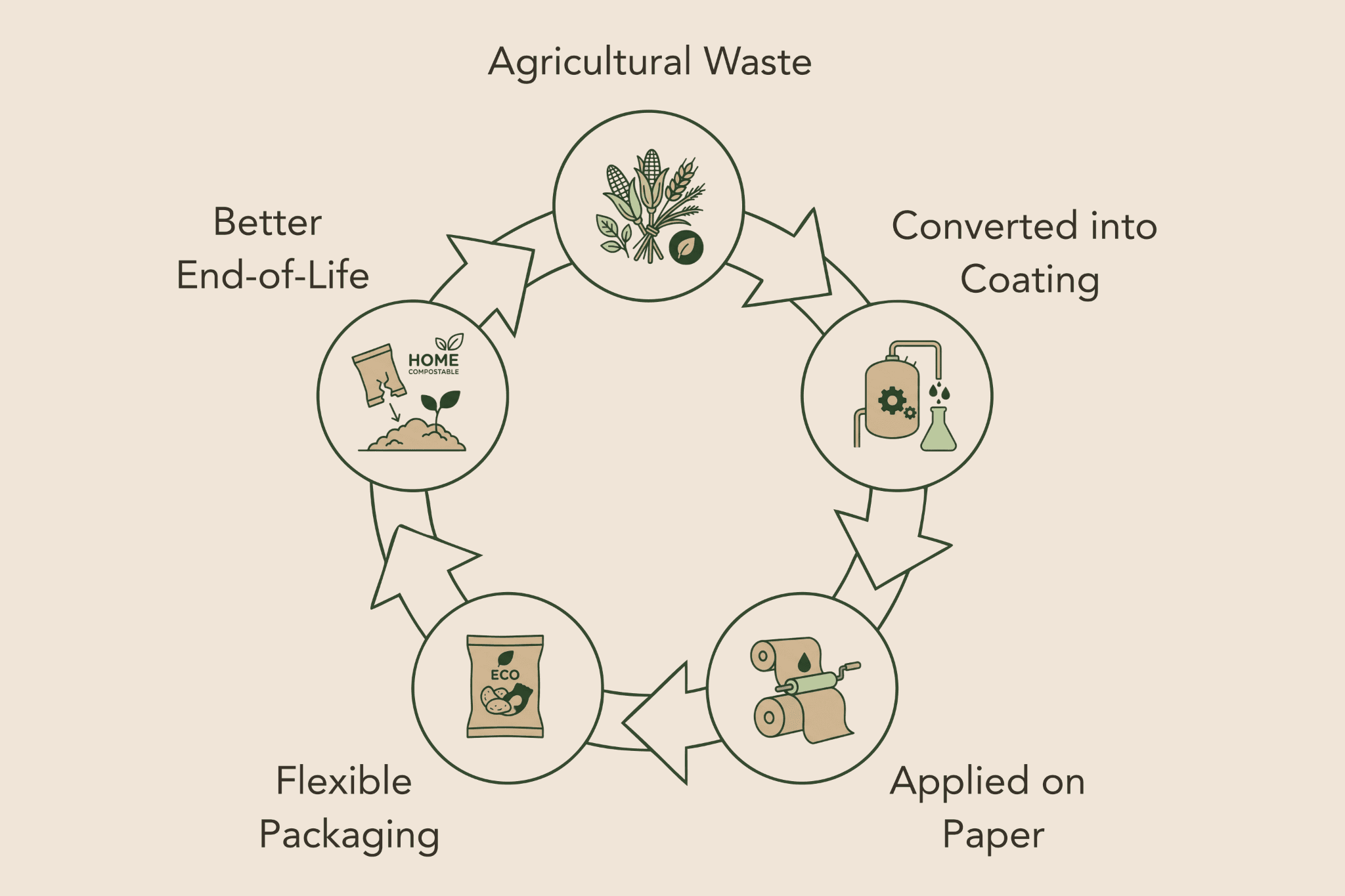
At Pippa, we approach paper-based flexible packaging from the performance side first.
Our bio-based coating is made using agricultural waste streams and applied to paper and biofilm substrates. It is designed to provide water, oxygen, oil and grease barriers along with heat-sealable properties. The material is also PFAS-free, home compostable and compatible with form-fill-seal machinery.
Rather than rebuilding conventional flexible packaging with multiple separate plastic layers, the aim is to bring several of those functions into one bio-chemically bonded coated structure.
That does not mean the same structure will work for every food product. Coffee, tea, dry foods, oily products and perishable foods can all demand different barriers, coating weights and processing conditions. Each application still needs to be evaluated through machine, product and shelf-life trials.
And that is perhaps the most useful way to think about the transition.
Moving from plastic to paper works better when we stop treating it as a material swap and start treating it as a packaging-design exercise.
Paper-based packaging uses paper as the main substrate, often with coatings added for barrier and sealing performance.
Yes, in some applications, if the paper structure meets shelf-life, barrier, sealing and machinery requirements.
Barrier coatings help paper resist moisture, oxygen, oil and grease while supporting product protection.
No. Coatings, laminates, adhesives and inks can affect how easily the complete pack can be recycled.
Pippa combines paper or biofilm substrates with a bio-based coating designed for flexible packaging applications.
Pippa’s coating is designed to provide water, oxygen, oil, and grease barrier performance.
Yes. Pippa is designed for form-fill-seal compatibility, subject to application and machine trials.
Pippa positions its coated packaging material as home compostable.
© 2026 Pippa • Privacy Policy • Terms & Conditions
Made with 💚 by Mission Sustainability