Sustainable Packaging / Packaging Technology
Learn how barrier coatings change paper surfaces, prevent pinholes and add water, oxygen, grease and sealing performance to packaging.

Sustainable Packaging / Packaging Technology
Learn how barrier coatings change paper surfaces, prevent pinholes and add water, oxygen, grease and sealing performance to packaging.
Put a drop of oil or water on an ordinary sheet of paper, and we can see the problem almost immediately. The liquid spreads, soaks into the fibres, and eventually reaches the other side.
For a notebook, that may not matter. For a pouch holding coffee, spices or an oily snack, it matters a lot.
Paper already gives us the basic structure of a package, but barrier coatings change what that paper can actually do. They can control how water, oxygen, grease and other substances interact with the surface, turning ordinary paper into a much more functional packaging material.
Paper may look solid, but at a microscopic level it is a network of cellulose fibres with spaces between them. Cellulose also naturally attracts water, which makes untreated paper vulnerable to moisture.
This is why plain paper has limitations when we ask it to hold oily foods, protect products from humidity or slow the movement of oxygen.
The 2024 review Oil- and Water-Resistant Paper Coatings explains that paper's porosity and hydrophilic fibre structure make it difficult to control the movement of water, oil and gases without additional surface treatment.
A barrier coating works by changing that surface.
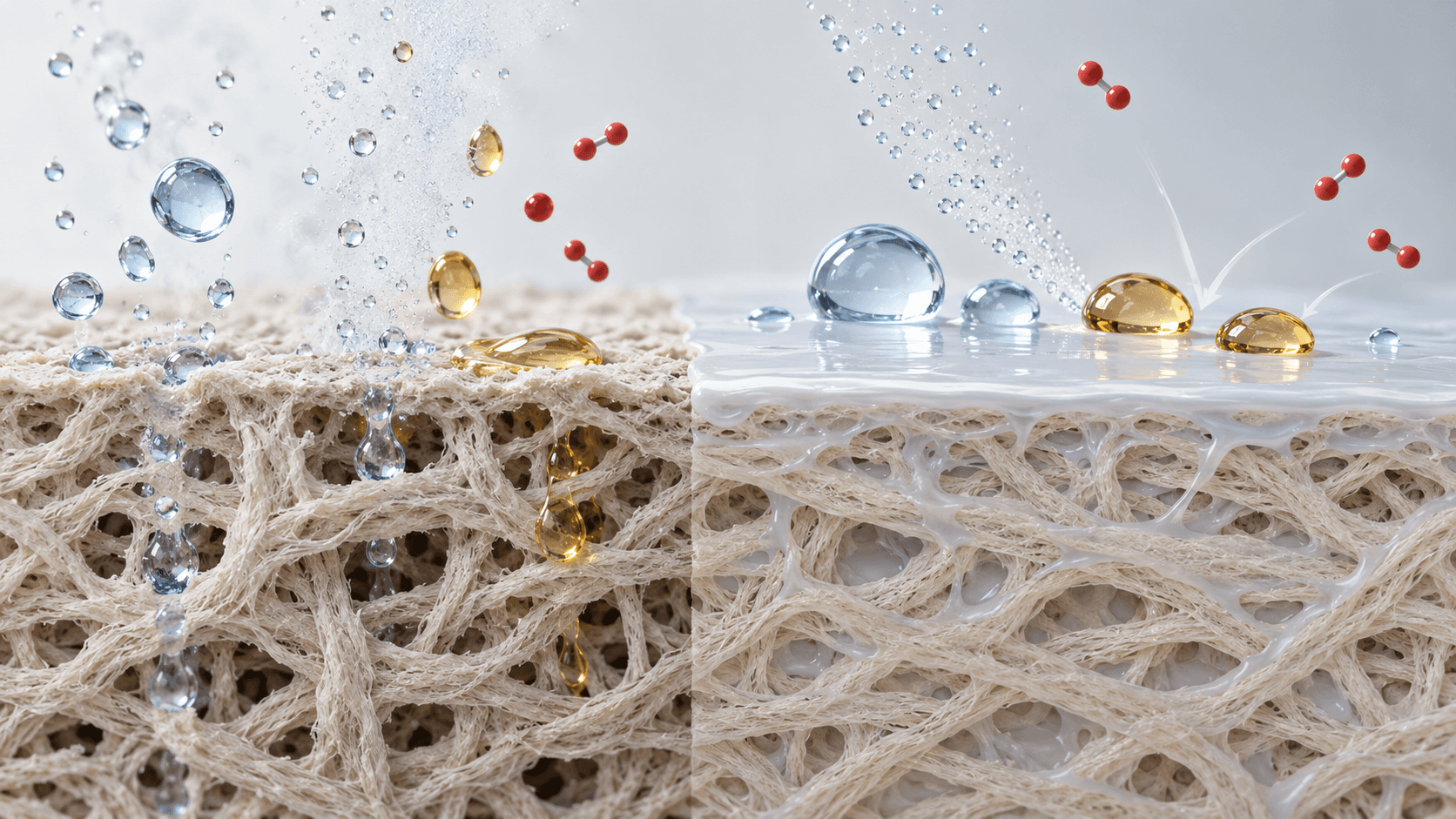
When we apply a coating to paper, the coating spreads across the fibre network and can cover or partially fill the spaces through which liquids and gases would otherwise travel.
Think of untreated paper as a loosely woven wall. A good coating fills enough of the gaps to make the route through that wall much more difficult.
The chemistry of the coating determines what it is good at blocking. Some materials resist oil well but are less effective against water vapour. Others provide a strong oxygen barrier but become less effective when humidity rises.
This is why developing a barrier coating is not simply about finding one material that “blocks everything.” The formulation has to balance several properties.
A 2026 review, Benchmarking Barrier Coatings for Paper Packaging, compares coatings based on their resistance to water, water vapour, oil, grease and oxygen, and shows how combining materials can create coatings that perform across several barrier categories.
The same coating formulation can behave differently depending on how it is applied.
Paper coatings can be applied using methods such as rod coating, blade coating, spraying, dipping or extrusion. The choice depends on factors such as the coating's viscosity, the base paper, production speed and the amount of material that needs to be deposited.
This matters because the objective is not simply to make the paper wet with coating. We need to create an even, controlled layer across the surface.
The review Oil- and Water-Resistant Paper Coatings describes rod, spray, knife, dip and extrusion coating among the methods used to add barrier properties to paper.
After application, the coating generally needs to dry or cure so that it forms its final structure.
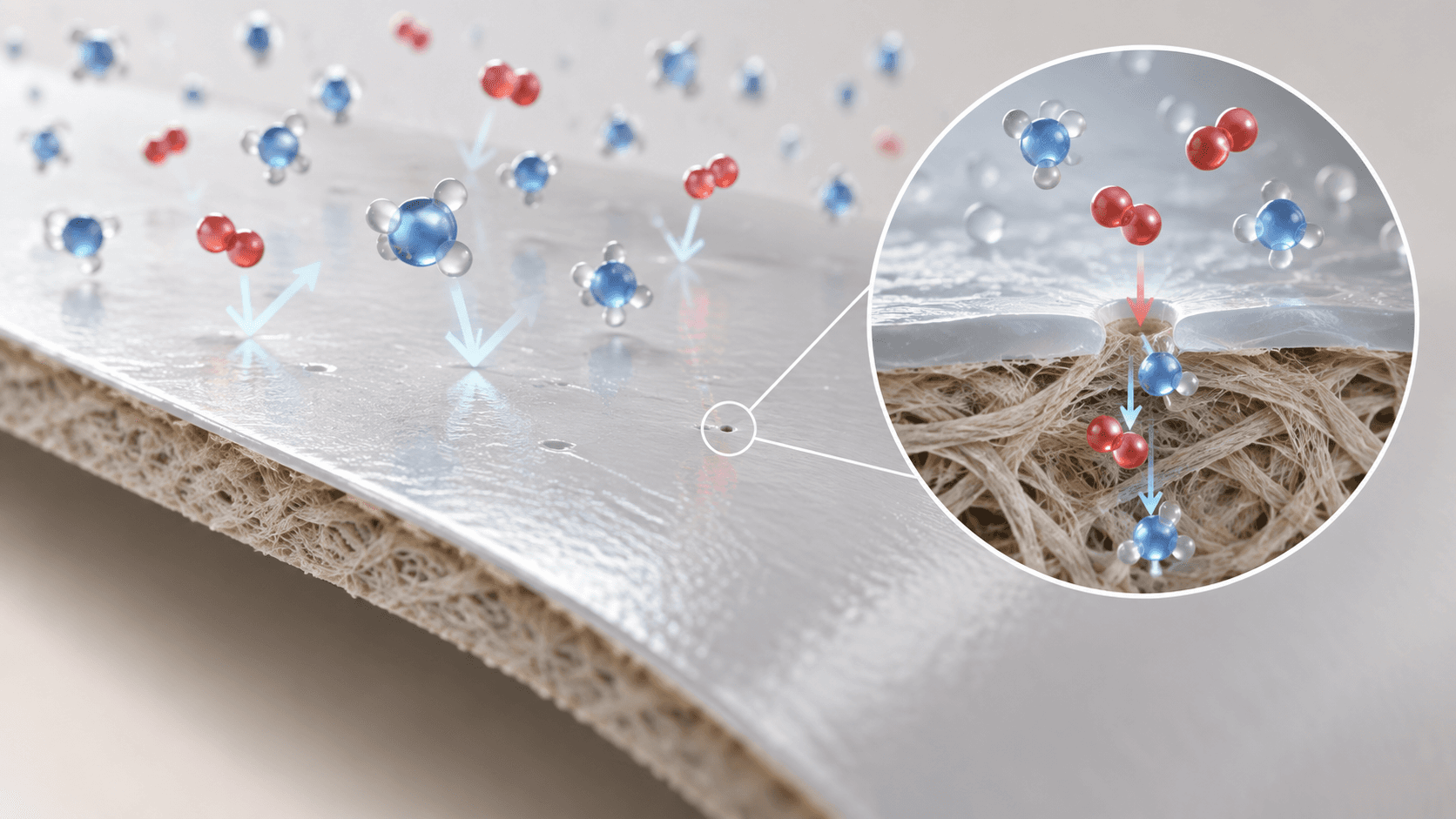
One of the interesting things about barrier coatings is how much a tiny defect can matter.
Imagine coating almost the entire surface perfectly but leaving microscopic gaps. Oxygen or moisture does not care that 99% of the surface looks good. It can find the weak points.
This is why coating uniformity and pinholes are important.
Pilot research on lignin-containing coatings for packaging materials found that changing the number of coating layers and coat weight affected pinholes and water-vapour transmission. As the coated surface became more complete, barrier performance improved substantially.
This is also why a coating that performs well in a small laboratory sample still needs to prove that it can be applied consistently at industrial scale.
It may seem logical that if a little coating improves the barrier, adding much more should improve it further.
In practice, the balance is more complicated.
Too little coating may leave pores and pinholes exposed. Too much can add cost, increase material use, and change how the paper bends, folds, or feels. Coat weight can also affect drying time and production efficiency.
Research on chitosan-coated greaseproof paper found that coating weight influenced oxygen and grease barrier performance, while the structure of the base paper continued to influence gas-barrier behaviour.
So the objective is not the thickest possible coating. It is the minimum coating needed to create a continuous and reliable functional layer.
We sometimes talk about a barrier coating as if it performs independently from the paper underneath it.
It does not.
A rough, highly porous sheet can absorb a coating differently from a smoother, denser paper. That can affect how evenly the coating sits on the surface and how much material is needed to achieve the same barrier.
A 2025 study on multilayered cellulose-based coatings on paperboard tested different coating combinations, coat weights, temperatures, and humidity levels, showing how both the coating architecture and environmental conditions influence performance.
In other words, choosing the coating and choosing the substrate are not separate decisions. They have to be developed together.
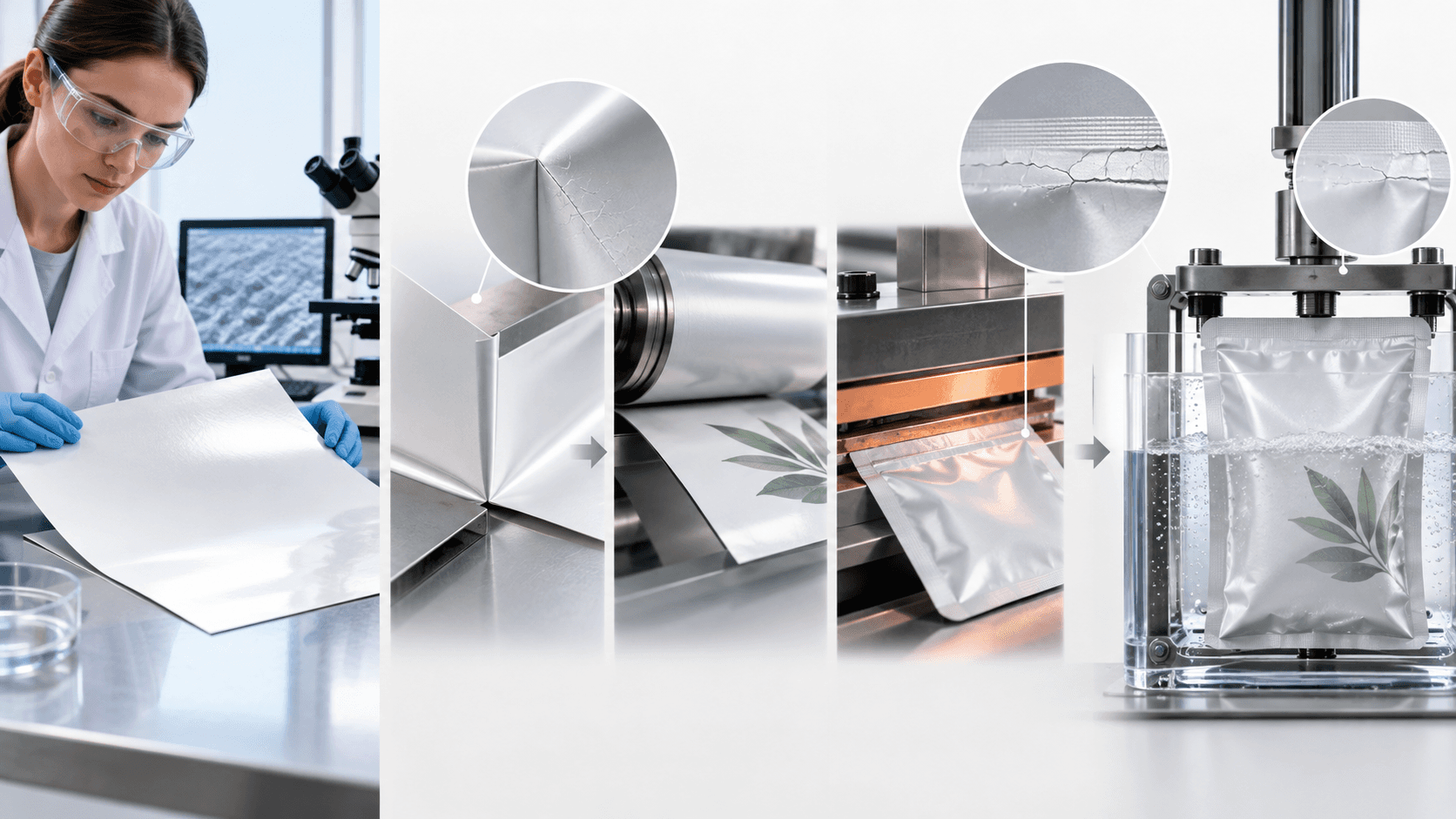
A flat sheet in a laboratory is only the beginning.
Once that coated paper becomes packaging, it may be folded, creased, printed, cut and heat sealed. Each of those steps can put stress on the coated surface.
If the coating cracks along a fold or fails near a seal, the barrier can weaken even though the untouched sheet performed well.
Heat sealing adds another challenge. The coated surfaces need to form a reliable bond under the right combination of temperature, pressure and time. Research on barrier properties and heat sealability of dispersion-coated paperboard found that coating composition, pinholes and adhesion all influenced both barrier and sealing performance.
That is why functional packaging has to be tested as a finished pack, not only as a coated sheet.
The most useful barrier coating is not always the one with the best result in a single test.
For food packaging, we may want oxygen resistance, moisture resistance and grease protection at the same time. We may also need the material to seal, remain flexible and work with the chosen paper.
Recent work on a biopolymer and carnauba-wax coating for paper is a good example of this approach: the researchers combined materials to improve oxygen, water-vapour, water and grease resistance rather than optimising only one barrier.
That is what makes coating formulation interesting. We are not simply covering paper. We are engineering the way its surface behaves.
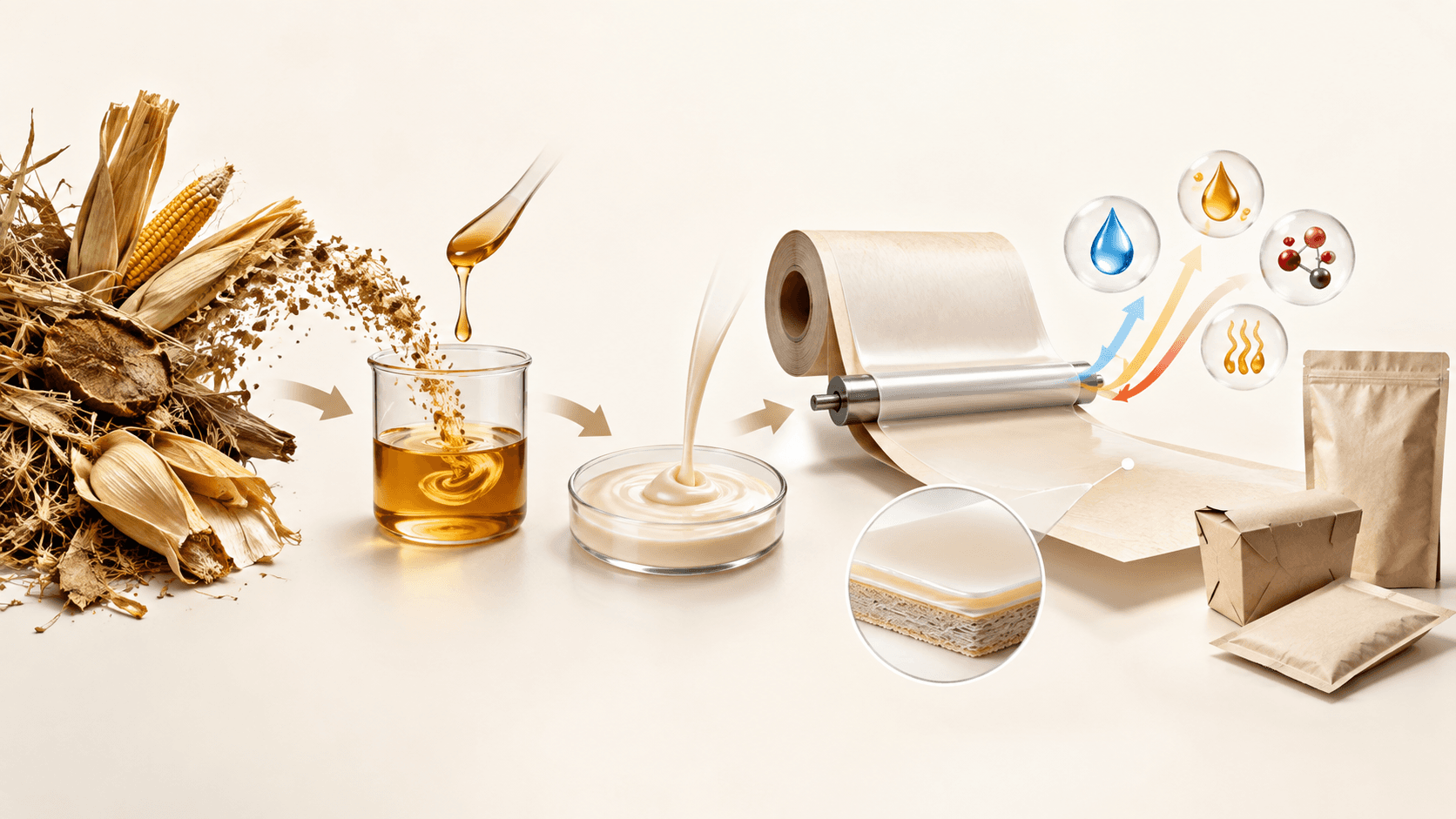
At Pippa, we start with agricultural waste streams, process and extract useful components, formulate them into a bio-coating and apply that coating to paper or biofilm substrates.
Our bio-chemically bonded coating is designed to bring several functions into the same layer: water barrier, oil and grease resistance, oxygen barrier and heat-sealable properties. Pippa also states OTR and WVTR values below 1 and compatibility with form-fill-seal machinery.
The interesting part for us is not simply that paper has been coated. It is what that coating allows the paper to do.
That is really the role of barrier coatings in functional packaging: take a material with useful structural properties, understand where it falls short, and engineer its surface to perform the jobs the package actually needs.
It creates a more continuous surface that can reduce the movement of substances such as water, oxygen, oil, and grease through the paper.
Small gaps in the coating can allow moisture or gases to pass through, reducing overall barrier performance.
No. Coat weight needs to be optimised because too little may leave gaps, while too much can affect cost, flexibility and processing.
Yes. Paper porosity, smoothness and fibre structure influence how evenly a coating is applied and how well it performs.
Pippa processes agricultural waste streams, extracts useful components, formulates the bio-coating and applies it to paper or biofilm substrates.
Pippa's coating is designed to provide water, oxygen, oil and grease barriers along with heat-sealable properties.
Pippa's approach is to combine several packaging functions within one bio-chemically bonded coating layer.
Pippa states that its coated material is compatible with form-fill-seal machinery, subject to the requirements of the application.
© 2026 Pippa • Privacy Policy • Terms & Conditions
Made with 💚 by Mission Sustainability